
The Digital Backbone of Orthopedic Innovation: Informatics in the Spotlight

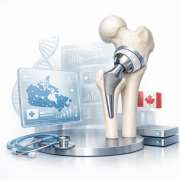
Orthopedic medicine is experiencing a revolution driven by the adoption of informatics. New analytical methods and technological advancements are transforming clinical practice, research, and education, moulding orthopedics into a sector that’s increasingly data-oriented. As the digital backbone of these medical advancements, informatics is providing unprecedented insights into patient care, operation techniques, and more. This article delves into how informatics is becoming the unsung hero of orthopedic innovation.
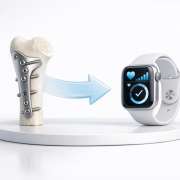
Traditionally, the study of bones, muscles, and the skeleton—the orthopedics realm—relied mostly on physical examinations, lab tests, X-rays, and the surgeon’s mastery. However, that is changing rapidly with the introduction and application of informatics to orthopedics. This integration’s amalgamation of software, hardware and healthcare knowledge is sparking a wave of innovation in research, data management, treatment, and patient representation. As a cornerstone of modern healthcare, informatics is the centrifuge of these digital transformations ensuring the excellent delivery of care to patients. This effect echoes even more apparently in documentation, imaging, reporting, analytics, and decision support.
One of the areas where informatics is making the most significant impact is in Electronic Health Records (EHR). EHR is a real-time, patient-centered record that provides instant, secure patient-care information to authorized users. In orthopedics, EHR goes beyond being just a digital version of a patient’s chart. The use of EHR is promoting a higher degree of patient engagement, which is crucial in treatment protocols where the patient’s active participation is required for successful treatment outcomes. Securely sharing medical histories and supporting documentation can significantly enhance patient care.
Moreover, EHR embedded with predictive analytics can vastly improve orthopedic treatment planning and execution, paving the way for personalized medicine. By effectively harnessing the massive volumes of data, EHR can predict the optimal treatment path, considering various factors, from genetics to lifestyle. These systems can learn over time, improving their predictive capability with patient data and driving more favorable outcomes.
Another stellar example of informatics in orthopedics is the advent of digital imaging and its subsequent evolution. In an orthopedics context, surgeons traditionally used X-rays as a primary mode of imaging. With the introduction of Digital Imaging and Communication in Medicine (DICOM), modern orthopedics has been proffered with a standardized framework for distributing and viewing any image regardless of origin. The storage, retrieval, sharing, and exchange of medical images have become extremely streamlined, leading to quicker diagnosis, thereby faster treatment administration. Surgeons can now assess the most intricate details using digital imaging technologies such as Computed Tomography (CT) scan and Magnetic Resonance Imaging (MRI).
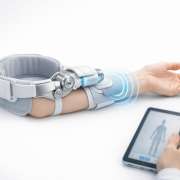
Informatics also brings orthopedics tangible benefits through Computer-Assisted Surgery (CAS). CAS systems utilize software and hardware to provide preoperative planning, enhance intraoperative execution, and enable accurate postoperative evaluations. These systems assimilate a vast amount of patient-specific data and multiple imaging modalities, yielding immaculate precision, resulting in better patient outcomes, shorter hospital stays, and fewer complications.
In research, informatics is revolutionizing how orthopedic clinical trials are conducted. The resourceful application of informatics can not only improve data quality and automate various processes, but it can also provide a pathway for new line of inquiries, thus transforming data into knowledge. In addition, it supports the increasing research focus on finding tangible benefits from analyzing population-level data and genetic information. Through newly emerging techniques and approaches, such as machine learning, orthopedic research may start unveiling insights into treatment outcomes, patient satisfaction, disease progression, and more.
From a perspective of enhancing education, orthopedic informatics envisions a world where medical education is more immersive, adaptive and tailored to each learner’s pace. With the future incorporating more of immersive technologies such as Virtual Reality (VR) and Augmented Reality (AR), students can learn about complex orthopedic cases in a low-risk, highly engaging environment.
In conclusion, as informatics integrates more deeply with orthopedics, the sector invariably evolves to be more efficient and patient-centric. The utility of informatics in enhancing the healthcare sector’s comprehensive facets highlights its profound impact. As the world continues to adopt digital healthcare, orthopedics carries a beacon, illuminating how integrating informatics with healthcare can drive innovation and revolutionize treatment.
Indeed, the digital backbone of orthopedic innovation – informatics, is now, more than ever, under the spotlight, for all the right reasons. Its role in transforming this domain is both extensive, profound, and merits appreciation and acknowledgement from every stakeholder group in the healthcare industry.




Leave a Reply
Want to join the discussion?Feel free to contribute!