
Informatics in Orthopedic Global Health: Paving the Way for Improved Worldwide Care

The world of Orthopedics, like most healthcare domains, has not escaped the digital revolution. The integration of information technologies into healthcare service processes, clinically termed “Health Informatics,” has gradually entered the realm of Orthopedics, significantly reshaping the scope and delivery of care, particularly in low to middle-income countries around the globe that are plagued by limited resources and glaring healthcare disparities.
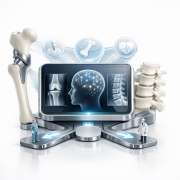
Health Informatics rings in the new era of healthcare in Orthopedics by leveraging robust data analysis to streamline processes, improve patient outcomes, escalate resource allocation, and most importantly, bridge the gap between developed and developing nations in the area of orthopedic care. This technological advent is undeniably playing a vital role in reshaping the landscape of Orthopedic Global Health and establishing a more equitable healthcare system worldwide.
Informatics: Addressing Orthopedic Challenges Globally
Broadly speaking, Health Informatics concerns itself with the management of healthcare information through computerized systems to ensure efficient and effective health service delivery. In the context of Orthopedics, its significance is inextricably entwined with managing the substantial disease burden associated with musculoskeletal disorders, especially in underprivileged areas with a lack of orthopedic expertise and technology. With Informatics, orthopedic surgeons now harness the power of cutting-edge technologies, such as AI and predictive analytics, to overcome these challenges and deliver improved orthopedic care.
Informatics has around the globe been utilized to develop databases and registries, enabling data-driven orthopedic care and research. These resources work in tandem with telemedicine networks, providing remote consultations and surgical planning assistance where there may be a dearth of onsite orthopedic expertise. Big Data also allows for the generation of epidemiological data, enhancing our understanding of disease distribution and trends to facilitate the optimal allocation of resources. Thus, Informatics is propelling orthopedic global health towards improved diagnostic, therapeutic, and prognostic accuracy, ultimately enhancing patient outcomes and satisfaction.
Informatics Revolutionizing Orthopedic Care in Low to Middle-Income Countries
Despite Orthopedics becoming an increasingly data-driven practice, numerous developing countries are grappling with significant data deficiencies. This is where Informatics steps in, paving the way for a more inclusive, wide-reaching Orthopedic Global Health. By building and implementing digital systems, not only can these countries create, manage and share comprehensive patient databases, but they can also gain access to global orthopedic data, research, and resources. This kind of global integration through Informatics platforms has the potential to address disparities in information, education, and resources, and set new horizons for Orthopedic care in these nations.
For instance, in many African countries, the integration of mobile health technologies, a key component of Health Informatics, has revolutionized orthopedic care delivery. Mobile applications have made it possible to provide diagnosis, therapy, and health education to remote locations. At the same time, they have allowed clinicians to collect primary health data for these areas, long devoid of such insights.
Future Directions
While Informatics has already achieved remarkable strides in Orthopedic Global Health, there is still a long way to go. Technological advancements, like Artificial Intelligence and Machine Learning, harbor immense potential in predictive modelling and personalized patient care. The integration of these technologies has the potential to revolutionize Orthopedics in developed and developing nations alike. However, the immense potential of Health Informatics in Orthopedics will only be realized through collaborations between governments, healthcare systems, and technology companies worldwide, to overcome barriers such as data security, and system interoperability.
The integration of Informatics in the world of orthopedic care cannot be ignored. However, exploiting its full potential will require policy reforms, adequate training for healthcare professionals, and public awareness on data privacy. The future of global Orthopedic Healthcare is bright with Informatics assuming a central role and with concerted efforts by all stakeholders, it can indeed result in better Orthopedic healthcare globally.






Leave a Reply
Want to join the discussion?Feel free to contribute!