The Paperless Practice: A 20-year retrospective on clinical digitisation.
The Paperless Practice: A 20-Year Retrospective on Clinical Digitisation
Two decades ago, I sat in a clinic surrounded by stacks of paper charts, each one a patient’s story locked in ink and time. The process was slow, prone to errorand fragmented. Today, that same clinic hums with digital precision. Patient histories, imaging, surgical plans-all accessible with a few clicks. The shift from paper to pixels has reshaped orthopaedics, but the journey reveals more than just convenience. It reveals how digitisation has redefined care itself.
Twenty years ago, electronic health records (EHRs) were a novelty, often clunky and resisted by clinicians accustomed to pen and paper. The promise was clear: better data management, faster access, improved communication. Yet early systems fell short. They were slow, unintuitiveand often added to the clinician’s burden rather than easing it. The challenge was not just to digitise but to do so in a way that enhanced clinical reasoning and patient outcomes.
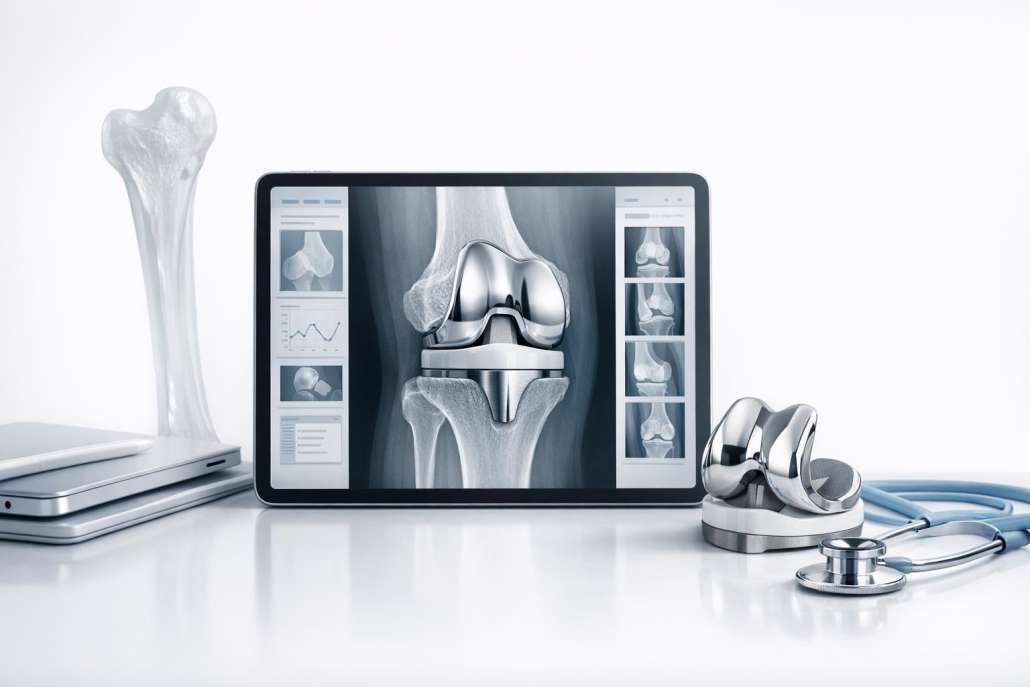
Fast forward to today. Modern EHRs integrate seamlessly with imaging, lab resultsand even wearable data. Surgeons no longer flip through pages but navigate dynamic dashboards that highlight risk factors, track recovery milestonesand flag complications before they manifest. This is not just digitisation; it is clinical empowerment through informatics.
The transformation is profound. Digitisation has shifted orthopaedic practice from reactive to proactive. Consider postoperative care: wearable sensors monitor joint movement and load in real time, feeding data back into the patient’s digital record. Algorithms analyze this data, alerting clinicians to deviations from expected recovery patterns. Early intervention becomes possible, reducing complications and readmissions. This level of insight was unimaginable in the paper era.
Moreover, digitisation has democratized expertise. Telemedicine platforms, powered by integrated digital records, allow specialists to consult across distances, bringing advanced musculoskeletal care to underserved regions. Data sharing accelerates research, enabling large-scale studies that refine surgical techniques and rehabilitation protocols. The paper chart was a silo; the digital record is a bridge.
Yet, the journey is not complete. The next frontier lies in agentic AI-systems that do more than store and display data. They will anticipate clinical needs, suggest personalized treatment plansand continuously learn from outcomes. This evolution will demand trust, transparencyand a relentless focus on the patient’s experience.
Looking back, the paperless practice is more than a technological milestone. It is a cultural shift in orthopaedics, one that values precision, accessibilityand collaboration. As we move forward, the question is not whether to digitise but how to harness these tools to restore mobility, relieve painand improve lives with greater agility and insight.
The future of musculoskeletal care is digital, but it remains deeply human. Every byte of data, every algorithmic insight, serves one purpose: better outcomes for the patient in front of us.