
The Pillars of Orthopedic Informatics: Data, Technology, and Innovation

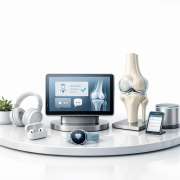
Orthopedic informatics, a burgeoning field in the domain of health care, is essentially a conjunction of data management, modern technology, and radical innovation. It involves the incorporation and application of these foundational pillars, which are data, technology, and innovation. These are essential in streamlining the extensive and sophisticated orthopedic practice, investing it with a higher degree of precision, accessibility, efficacy, and ultimately, patient satisfaction. Understanding these pillars helps to elucidate the instrumental role of orthopedic informatics in the broader gambit of healthcare management.
Data is the lifeblood of orthopedic informatics. It includes a diverse range of information about patients — from general data such as age, sex, medical history, and lifestyle information to specific data like surgical outcomes, post-operative recovery rates, frequency of orthopedic complications, and more. This data is critical not only for individual patient treatment strategy development but also for broader research into orthopedic treatments, innovations and the prevention of orthopedic disorders. Appropriate data management also aids in improved decision-making, optimized resource utilization, and advanced risk management. More importantly, it establishes a benchmark for quality assurance, enhancing the credibility and visibility of orthopedic practice. It allows healthcare professionals to compare performances, engage in reflective learning and strive for continuous improvement.
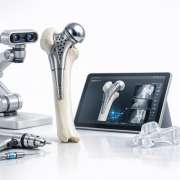
Secondly, technology is a key pillar in orthopedic informatics, acting as an indispensable facilitator. Development in technology, particularly in the realm of artificial intelligence (AI), machine learning, cloud computing, robotics, and the Internet of Things (IoT), has reshaped orthopedic practice. AI and machine learning have been applied to orthopedic diagnostics, enhancing the accuracy of orthopedic imaging interpretation exponentially. Complex algorithms help to detect minute abnormalities in x-rays, CT scans, MRIs which may be inadvertently missed by the human eye. Likewise, cloud-based systems have streamlined patient data storage and access, ensuring real-time availability of medical data, reducing redundancy, and facilitating seamless patient referrals. Telesurgery is another cardinal advent of technology, making remote surgery feasible. In the hands of a skilled orthopedic surgeon, telesurgery eliminates the barriers of geographical distance and makes specialist interventions available around the globe. Clearly, technology has acted as a lens, amplifying the reach and applicability of orthopedic informatics.
The third pillar, innovation, breathes ingenuity into orthopedic informatics. It is closely interlinked with research and development, and strives to contrive better methods for orthopedic treatment. This theme of innovation permeates orthopedic practice in a variety of ways. From the design of cutting-edge orthopedic implants with better compatibility and longevity to minimal intervention techniques that expedite recovery, innovation has revolutionized orthopedics. The development of bone cements, biodegradable implants, 3D-printed orthopedic implants are just a few examples of radical innovation in this field. Similarly, on a macro level, innovation is pushing boundaries in improving health care policies, streamlining orthopedic health care delivery, fostering affordability and inclusivity, and improving patient education and satisfaction.
Conclusively, orthopedic informatics, a fine blend of data, technology and innovation, is propelling the orthopedic field into a future of more preciseness, patient-centricity, affordability, and inclusivity. The pillars reinforce each other, underlining the immense potential and inherent synergy of data, technology, and innovation in healthcare. These pillars are not isolated but rather integrated, working together to support the structure of ever-growing and evolving orthopedic informatics.






Leave a Reply
Want to join the discussion?Feel free to contribute!