
Wearable Tech for Orthopedic Recovery: Tracking Progress, Enhancing Outcomes

Orthopedic recovery has been traditionally characterized by lengthy and often arduous journeys to complete rehabilitation. Doctors often rely on the patient’s subjective reports and occasional clinical visits to gauge progress. However, significant changes have come about in recent years, transforming the scenarios. Wearable technology has emerged as a vital player, revolutionizing orthopedic recovery by offering an objective way of tracking progress and enhancing outcomes, making the rehabilitation journey more manageable and efficient for both patients and healthcare providers.
The crux of wearable technology for orthopedic recovery is to capture continuous, real-time data about a patient’s condition. This data collection ranges from the patient’s movements, physical exertion, and quality of sleep to heart rate variability, among many other essential health metrics. Not only does this advent in wearable tech provide healthcare providers with valuable insights into patient’s recovery progress but it also empowers the patients, making them active participants in their recovery journey.
One of the primary examples of wearable technology for orthopedic recovery is smart knee braces or smart insoles. Equipped with an array of sensors, these devices monitor the patient’s joint movements and weight distribution and can alert through real-time feedback when there is any straining or harmful movements. The data collected can be analyzed to predict any potential issues or setbacks in the recovery process, allowing for timely intervention and adjustment of the treatment plan. Furthermore, these devices can also serve as a motivational tool, allowing patients to see their progress, set personal goals, and adhere more effectively to their rehabilitation plan.
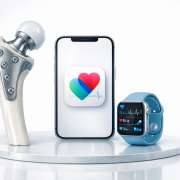
Other wearable technologies like smartwatches and fitness trackers have also found their applications in orthopedic recovery. They are usually equipped with health-tracking features, including heart rate monitors, sleep trackers, and a step counter. Moreover, they can sync with smartphones, providing people easy access to all of their health data at their fingertips. This continuous monitoring results in a more holistic approach to health, which greatly aids orthopedic patients in their recovery process and beyond.
However, it’s not just about collecting data. The power of wearable tech in orthopedic recovery predominantly lies in the subsequent data analysis by algorithms and AI-based systems. The sheer volume of data collected by wearable devices provides an ideal environment for deep learning algorithms and artificial intelligence to predict patterns, recognize anomalies, and essentially provide personalized care plans, assessments, and feedback. This has been particularly transformative for home-based recovery programs; remote patient monitoring has become more feasible and accurate, reducing the need for frequent clinical visits, and enabling healthcare providers to support a larger number of patients more effectively.
Despite the numerous advantages, like with any nascent technology, there are still certain challenges to overcome in the realm of wearable tech for orthopedic recovery. One of these is data security. The intricate collection, storage, and analysis of personal health data must be addressed with stringent data privacy standards. It’s crucial to ensure that confidential patient information is safeguarded against unpermitted access and manipulation. Another challenge lies in the need for rigorous clinical trials to establish the efficiency and reliability of different wearable technologies in orthopedic recovery. This would also help to determine standards and regulations for wearable tech in healthcare.
The future of wearable tech in the realm of orthopedic recovery looks promising. Exciting advancements are occurring not only from a technology standpoint but also from a usability perspective. Future wearable tech will possibly incorporate more human-centered designs and offer a more seamless interface integrating with day-to-day activities and other digital platforms. Gradually, as these technologies mature and become more common, they will significantly impact the way orthopedic recovery is approached, making it more interactive, personalized, and effective.
Wearable tech for orthopedic recovery – while still in its nascent stages – signifies an exciting shift in healthcare. Its potential to track progress and enhance outcomes, bridging the gap between patients and healthcare providers, is revolutionizing the field. As this technology continues to evolve, there’s little doubt that its benefits for orthopedic recovery will continue to support therapists and doctors, equaling more efficient rehabilitation and better patient results in the future.







Leave a Reply
Want to join the discussion?Feel free to contribute!