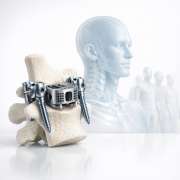
Reinforcement Learning in Robotics: How tools learn from the surgeon.

Reinforcement Learning in Robotics: How Tools Learn from the Surgeon
A surgeon’s hands carry decades of experience, intuitionand split-second judgment. Yet, even the most skilled hands face limits-fatigue, tremoror the sheer complexity of anatomy. What if surgical tools could learn directly from those hands, adapting and improving with every procedure? Reinforcement learning (RL) in robotics is making that vision real. It’s not just automation; it’s a partnership where machines evolve by watching, mimickingand refining based on the surgeon’s actions.
Reinforcement learning is a branch of artificial intelligence where an agent learns optimal behavior through trial and error, guided by feedback from its environment. In orthopaedics, this means robotic systems don’t just follow pre-set commands. They observe the surgeon’s movements, receive real-time feedback on outcomesand adjust their actions to improve precision and efficiency. Unlike traditional programming, where every step is hard-coded, RL enables surgical robots to develop a nuanced understanding of complex tasks-like bone cutting or implant positioning-by continuously learning from each case.
This shift matters because orthopaedic surgery is inherently variable. No two patients present identical anatomy or pathology. Surgeons adapt instinctively, but robotic systems have struggled to match that flexibility. Reinforcement learning changes the game by allowing robots to internalize the surgeon’s expertise and respond dynamically. For example, during a knee replacement, an RL-enabled robot can learn the subtle force adjustments a surgeon makes when navigating dense bone or fragile tissue. Over time, the robot refines its technique, reducing errors and improving implant alignment without constant human recalibration.
The impact on patient outcomes is profound. More precise cuts and implant placements translate to better joint function, less postoperative painand longer implant longevity. For surgeons, RL-powered tools reduce cognitive load and physical strain, allowing them to focus on critical decisions rather than repetitive motions. This technology also accelerates the learning curve for less experienced surgeons, as the robot’s adaptive behavior provides a form of real-time mentorship embedded in the procedure.
Consider the evolution over the past 25 years. We moved from manual record-keeping to computer-assisted surgery, then to robotic arms executing pre-planned trajectories. Now, reinforcement learning introduces a new era where robots are not just tools but active learners. They become extensions of the surgeon’s skill, continuously improving through interaction rather than static programming. This agentic AI approach respects the surgeon’s expertise while amplifying it.
Looking ahead, reinforcement learning will deepen the integration between human and machine. Surgical robots will anticipate needs, suggest adjustmentsand even detect subtle changes in tissue quality that escape the naked eye. Data from thousands of surgeries will feed into these systems, creating a collective intelligence that benefits every patient. The future of orthopaedics lies in this symbiosis: surgeons guiding machines that learn, adaptand elevate care beyond what either could achieve alone.
Reinforcement learning is not just a technological upgrade. It’s a paradigm shift that transforms surgical robotics from rigid instruments into intelligent partners. For patients, it means safer, more personalized procedures. For surgeons, it means tools that learn from their expertise and help them push the boundaries of what’s possible. This is the future of musculoskeletal care-where every movement teaches, every procedure improvesand every patient benefits.