
Data-Driven Orthopedics: How Informatics is Revolutionizing Care

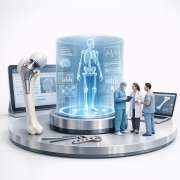
As we navigate through the 21st-century healthcare landscape, a quiet revolution is taking shape: the integration of data-driven informatics into every facet of medical care. The orthopedic field is no exception, as it delves deeply into informatics to improve patient outcomes, streamline processes, and create more efficient ways of delivering care.
Informatics, at its core, is the science of processing data for storage and retrieval. In healthcare, it’s about utilizing data to inform decision-making processes. Traditionally, decisions in healthcare, including orthopedics, were made based on a combination of personal clinical experience, relevant research studies, and patient preferences. It was a method that often served practitioners well, but also left a lot of room for error and inconsistency. However, the recent proliferation of digital health records and advances in data processing technologies have opened a new avenue for enhancing healthcare delivery – data-driven decision-making.
The integration of informatics in orthopedics holds the potential to revolutionize the entire field, providing a more comprehensive understanding of patient health and predicting outcomes with greater accuracy. Such data-driven approach enables physicians to strategize treatment plans that are personalized to individual patient’s needs, contributing to improved recovery rates and a better quality of life for the patients. Furthermore, it assists in population health management, identifying trends and patterns in orthopedic conditions, aiding preventive measures, and strategic planning of health services.
One key area where informatics is causing significant ripples in orthopedics is in predictive modeling and adapting precision medicine. Doctors are now capable of using data from medical imaging, genomics, and electronic health records(R-EHRs) to predict patient outcomes and personalize treatment plans. For instance, data analytics can identify patients at high risk for surgical complications and aid in advising patients on the best course of action. Additionally, predictive modeling can assist in the estimation of a patient’s length of stay, the likelihood of readmission, and the potential cost of a care plan.
Data-driven orthopedics also proves beneficial in the field of research. Previously, clinical studies were performed using small, relatively homogeneous populations, lending to results that often weren’t generalizable to the broader public. However, the big data approach allows orthopedic researchers to access vast amounts of patient data across diverse demographics, paving the way for more inclusive and conclusive studies. With the help of data analytics, researchers can detect patterns and trends in this vast field of information, enabling more substantial research conclusions and facilitating the development of cutting-edge orthopedic procedures and treatments.
Moreover, utilizing informatics in orthopedics can lead to significant cost savings. With a value-based healthcare system in place, providers are incentivized to improve quality and efficiency of care. Evidence-based practice, steered by robust data analytics, can help avoid unnecessary treatments and procedures, leading to optimal resource usage. Also, better understanding of patient data can prevent readmissions, further contributing to the reduction in healthcare costs.
Despite the promise of informatics in orthopedics, challenges remain. There are concerns related to data privacy and security, as increased reliance on electronic systems makes patient data more vulnerable to cyberattacks. Additionally, to unlock the full potential of data-driven healthcare, there is a need for interoperability among health information systems to ensure seamless data sharing and integration.
In conclusion, the integration of data-driven informatics in orthopedics is already showing transformative effects, from enhancing patient care to improving research capabilities. It’s a burgeoning area, and while challenges exist, the benefits far outweigh the hurdles. With continued advancements in technology and an increasing appreciation for the value of data in decision making, we can expect this revolution in orthopedic care to continue evolving, carving out a future of healthcare that’s smarter, more efficient, and ultimately, holds better outcomes for patients.




Leave a Reply
Want to join the discussion?Feel free to contribute!