
The Convergence of Data and Care: Informatics Empowering Orthopedics
In the realm of medical science, orthopedics holds an unprecedented role thanks to its ability to repair, manage and prevent disorders related to the body’s musculoskeletal system. Yet, this field remains fraught with challenges due to the largely complex nature of bones, joints, ligaments, and muscles’ structural issues. However, with the advent of data informatics, these impediments appear less mountainous. The convergence of data and care, where informatics plays a protagonist role, is reshaping and empowering orthopedics like never before.
Health informatics forms the backbone of modern healthcare, and orthopedics is no exception. Informatics is the science that focuses on how to employ, handle, and deliver information. In healthcare, it’s about managing health data and turning them into actionable insights for efficient patient care. Such a breed of data-driven healthcare is progressively making its way into orthopedics, providing solutions to many ambiguities and unlocking infinite possibilities. From enhancing diagnostics to improving surgical planning and personalized patient care, the inclusion of data into orthopedic care has been a big step forward.
The study and understanding of a patient’s history, symptoms, and reactions to various treatments have been greatly enhanced with the help of health informatics. An orthopedist’s reliance on their intuitions or basic examinations has been replaced with data-based decision making. Using patient-recorded outcome measures (PROMs) and patient-recorded experience measures (PREMs), doctors can now personalize and prioritize their treatment protocols. These data points not only help with diagnostics but also allow healthcare providers to understand a patient’s progress with a specific treatment regimen. Moreover, there’s an ability to predict the likely outcomes or complications of any planned treatment, which drastically improves patient safety and the overall effectiveness of the care provided.
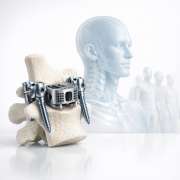
When it comes to surgical planning, data informatics comes in handy by providing surgeons with comprehensive patient data. Clinicians can use digital human models, predictive analytics, and machine learning-driven data interpretation to plan surgery. It helps identify patient-specific factors that could affect the surgery outcomes. As an example, the pre-operative planning tool Materialise Mimics Enlight—primarily designed to help surgeons plan and practice for a particular patient’s procedure—has revolutionized complex, patient-specific procedures like stent placement surgery. These tools employ sophisticated algorithms to process medical images, calculate important clinical parameters, and even simulate possible surgery outcomes.
Data informatics has also given a significant push towards personalized patient care in orthopedics. Precision, tailored treatment methodologies have taken the front seat—relying on robust medical databases and cloud-based patient data. These enable physicians to consider individual patient profiles, their unique anatomical structures, the nature of disease progression, and genetic markers, among other aspects. Using these insights, clinicians can personalize treatment plans—which can include drug prescriptions or even the types of implants used in surgeries—thereby, leading to improved recovery rates, reduced risks, and better patient outcomes.
Another breakthrough of inserting data into orthopedic care is the use of wearable technology. Wearables collect and transmit real-time health data, providing both care providers and patients with a more accurate picture of the patient’s health. From a rehabilitation perspective, the data gathered can inform physiotherapists and orthopedic surgeons about the patient’s progress post-surgery or post-injury, helping fine-tune and adjust the plan of care. This has not only given healthcare providers a keen insight into the rehab process but has also empowered patients to take greater control of their recovery.
Despite all these promising developments, issues around data privacy, cybersecurity threats, and interoperability hiccups are potential stumbling blocks that need to be addressed effectively. Also, it’s important to realize that technology and data can only support, and not replace, the role of orthopedic surgeons. Informatics, although increasingly powerful, has yet to evolve to a point where it possesses the nuanced cognitive capabilities, the emotional intelligence, and the ethical discretion that a human physician brings to the table.
Nonetheless, it is unquestionable that the convergence of data and care, with health informatics, is transforming how orthopedic care is delivered today. It is an exciting time in the journey of orthopedics, as we stand on the threshold of a new era—an era where technology and data serve as essential adjuncts to the orthopedist’s hand and mind, making bone and muscle health management safer, more precise, and more patient-specific than ever before.






Leave a Reply
Want to join the discussion?Feel free to contribute!