
Ways Artificial Intelligence is Revolutionizing Orthopedic Surgery

The field of orthopedics is currently experiencing a major seismic shift, thanks to the dramatic leaps of artificial intelligence (AI). Known for its ability to learn, reason, and self-correct, AI is truly reshaping the way orthopedic surgeries are done with stunning applications that range from preoperative planning to postoperative care. By intelligently employing AI, surgeons not only increase their efficiency and effectiveness but also improve the overall patient experience. Indeed, what was once the stuff of science fiction, is now a reality in orthopedic treatment rooms all around the globe.
One of the most transformative uses of AI in orthopedics is in the realm of predictive analytics or the ability for such technologies to foresee potential complications ahead of a procedure. AI algorithms are used to pour through vast amounts of data from patient records, family histories, and other valuable sources to identify high-risk patients and tailor treatments accordingly. For example, an algorithm may be trained on thousands of cases to identify factors that have led to postoperative complications like infections or prosthesis failure. With such foresight, surgeons can modify their strategies to reduce the associated risks, thereby improving the quality of patient care.
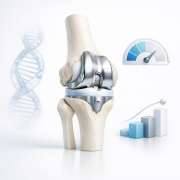
AI is not only vastly improving preoperative planning but is also revolutionizing the actual process of surgery in orthopedics. AI-driven robots are now assisting in precision bone cuts and drilling holes in procedures like knee and hip replacements, providing an unprecedented level of consistency, and precision. Some systems can even learn from their past operations and continuously evolve to improve their performance. Such robotic solutions not only maximize the surgical success rate but also reduce the recovery time significantly due to the minimal invasiveness, reducing costs and patient discomfort.
Moreover, AI-driven imaging is paving the way for significant advancements in diagnostics. Traditionally, orthopedic diagnoses depend heavily on imaging studies like X-rays, MRIs, and CT scans. Interpreting these images can sometimes be difficult, resulting in diagnoses that are not completely accurate. However, applying AI to analyze these images can assist in making more accurate diagnoses. For instance, algorithms can meticulously sieve through minute structural anomalies that a human eye could miss or misinterpret, aiding in diagnosing ailments such as fractures, infections or tumors with far greater accuracy. Thereby, ensuring patients receive the appropriate treatment promptly.
In the post-operative phase, AI plays a substantial role in ensuring optimal patient care. Through advanced algorithms, AI can sift through post-operative data to look for signs of complications such as infections, propelling early detection and treatment. Also, AI is being used to develop personalized post-operative rehab regimens based on data analysis to ensure faster and safer recovery. Research is already underway on AI systems that can observe and learn from the physical movements of patients during rehabilitation, and provide feedback to help them improve.
Much of what we see today in the application of AI in orthopedic surgery is just the tip of the iceberg. The potential uses of AI in the field are vast and are limited only by the creativity and innovation of medical professionals and technologists. As AI systems continue to learn and improve, it is expected that they will become even more reliable and accurate, resulting in unprecedented efficiency, safety, and accuracy. Further, as these systems become more mainstream, their costs are expected to drop, making them accessible to a greater number of patients.
However, it’s crucial to remember that as transformative as these technologies can be, they shouldn’t replace human judgment and expertise but instead serve as invaluable tools in the hands of medical professionals. Ethical considerations, such as patient privacy and data security, also need to be rigorously addressed before fully integrating AI into the healthcare system.
Despite these challenges, there is an unmistakable excitement in the orthopedics field. Artificial intelligence stands to propel us into a future where surgical complications are significantly reduced, patient recovery times are shorter, and overall patient care is vastly better. With its breathtaking speed of advancement, and its near limitless potential, AI has truly begun to revolutionize orthopedic surgery.






Leave a Reply
Want to join the discussion?Feel free to contribute!