The ROI of Health Informatics: Proving the value to hospital boards.

The ROI of Health Informatics: Proving the Value to Hospital Boards
Hospital boards face a relentless question: where to invest limited resources for the greatest impact. Orthopaedics, with its high volume and complex care pathways, offers fertile ground for innovation-but only if the return on investment (ROI) is clear. Health informatics promises transformation, yet skepticism lingers. How do you translate terabytes of data and AI algorithms into dollars saved, complications avoidedand lives improved?
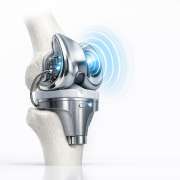
Consider a common scenario: a patient arrives for a total knee replacement. Traditionally, surgeons rely on experience and static imaging. Post-op, recovery is monitored through periodic visits and patient reports. Complications like infection or poor mobility may surface late, increasing costs and patient suffering. Now, imagine integrating continuous data streams from wearable sensors, predictive analytics flagging risk in real timeand digital dashboards guiding clinical decisions. The question hospital boards ask is simple: does this technology pay off?
Health informatics delivers ROI by shifting care from reactive to proactive. Wearables track gait, range of motionand pain levels daily, feeding data into AI models trained on thousands of similar cases. These models identify subtle warning signs-early swelling, reduced activity-that precede complications. Surgeons and care teams intervene before problems escalate. The result: fewer readmissions, shorter hospital staysand reduced need for costly revisions. This is not theory. Institutions adopting these systems report measurable drops in post-op complications and improved patient satisfaction scores.
Beyond patient outcomes, informatics streamlines workflows. Automated data capture eliminates manual charting, freeing clinicians to focus on care rather than paperwork. Predictive scheduling optimizes operating room utilization, reducing downtime and overtime expenses. Real-time analytics highlight bottlenecks and resource gaps, enabling targeted improvements. Hospital boards see these efficiencies reflected in tighter budgets and better margins.
The financial case extends to risk management. Orthopaedic procedures carry inherent risksand adverse events can trigger expensive litigation and reputational damage. Informatics tools create detailed, objective records of care pathways and decision points. This transparency supports quality assurance and compliance, reducing liability exposure. Boards recognize that investing in data infrastructure is an investment in institutional resilience.
Skeptics often point to upfront costs-hardware, software, training-as barriers. Yet, the 25-year arc of orthopaedic practice teaches us that early adoption of technology yields exponential returns. From paper charts to electronic medical records, each leap has improved accuracy, coordinationand outcomes. Agentic AI and advanced analytics are the next frontier. The key is framing informatics not as a cost center but as a strategic asset that drives value across clinical, operationaland financial domains.
Looking ahead, the ROI conversation will deepen as health systems embrace personalized orthopaedics. Genomic data, biomechanical modelingand patient-reported outcomes will converge in integrated platforms. Boards will demand evidence not just of cost savings but of enhanced quality of life and long-term health. Informatics will enable this by turning raw data into actionable insights tailored to each patient’s unique biology and lifestyle.
Hospital boards hold the purse strings, but the future of orthopaedic care depends on their vision. Proving the ROI of health informatics is no longer optional-it is imperative. When data drives decisions, workflows become smarter, risks diminishand patients recover stronger. This is the promise we must deliver.