Why We Build: The philosophy behind OrthoNet.

Why We Build: The Philosophy Behind OrthoNet
I remember the first time I held a patient’s chart filled with handwritten notes, X-ray films tucked under the arm. The process was slow, fragmentedand prone to error. Twenty-five years later, the tools have changed dramatically. Yet, the core challenge remains: how do we deliver better musculoskeletal care, faster and more precisely, while keeping the patient at the center?
OrthoNet was born from this question. We build not because technology is new or exciting, but because it solves real problems that surgeons and patients face every day. Our philosophy is simple: technology must serve the human story behind every fracture, every joint replacement, every rehabilitation plan.
The clinical reality is complex. Orthopaedic surgeons juggle vast amounts of data-imaging, patient history, biomechanical metricsand now streams of real-time information from wearables. Without a coherent system, this data becomes noise. OrthoNet harnesses informatics to turn noise into clarity. We create platforms that integrate AI-driven analytics with intuitive workflows, so surgeons spend less time searching and more time deciding.
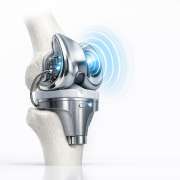
Consider the patient recovering from anterior cruciate ligament reconstruction. Traditional follow-up relies on periodic clinic visits and subjective reports. OrthoNet’s approach layers continuous data from wearable sensors with predictive algorithms that flag deviations in gait or range of motion. This early warning system empowers clinicians to intervene before setbacks become complications. The patient feels seen and supported beyond the clinic walls.
This is not about replacing the surgeon’s judgment. It’s about amplifying it. Our tools respect the expertise built over decades while providing new lenses to view patient progress. Data becomes a partner, not a distraction. Surgeons can tailor rehabilitation protocols dynamically, improving outcomes and reducing unnecessary imaging or visits.
The transformation extends beyond individual care. OrthoNet’s platforms enable collaborative networks where surgeons share anonymized data, accelerating collective learning. Patterns emerge faster, best practices spread widerand innovation cycles shorten. This network effect turns isolated pockets of expertise into a global force for musculoskeletal health.
We build with a relentless focus on usability. Complex algorithms hide behind clean interfaces designed for the realities of busy clinics and operating rooms. We know that adoption depends on seamless integration, not added burden. The technology must feel like an extension of the surgeon’s hands and mind.
Looking ahead, the future of orthopaedics is not just digital-it’s deeply human. As AI matures, it will anticipate needs, personalize care pathwaysand democratize access to expert-level decision support. OrthoNet envisions a world where every patient benefits from this intelligence, regardless of geography or resources.
We build because every innovation is a step toward that future. Because every data point, every algorithm, every wearable sensor is a tool to restore mobility, reduce painand reclaim lives. This is why OrthoNet exists: to bridge the gap between cutting-edge informatics and the timeless mission of healing the musculoskeletal system.
The work is never done. But with every line of code and every clinical insight, we move closer to a new standard of care-one where technology and humanity advance together. That is the philosophy behind OrthoNet.